Nobody sits down to think about transport liability on a normal Tuesday. It usually takes an incident to force the question — a vehicle breakdown on the highway, a late-night drop-off that goes sideways, a dispute over who was actually in the car when something happened. That's the moment companies realize they don't have much documentation to fall back on. A Transport Management System for Companies exists, in part, to stop that gap from ever becoming a real problem.
I want to be upfront: this isn't a one-sided pitch. It's worth genuinely weighing the pros and cons, and being honest about the trade-offs, before deciding if a Transport Management System for Companies makes sense for your organization.
Quick disclaimer: none of this is legal advice specific to your jurisdiction, contracts, or insurance policy. If real liability exposure is on the table, talk to your legal counsel.
Before comparing approaches side by side, it's worth naming where liability exposure usually sits when transport is handled manually:
None of this means transport is inherently unsafe. It means that when something does go wrong, a company without a proper Transport Management System for Companies in place often has little to point to — not with employees, insurers, or regulators.
| Risk Area | Manual Coordination | Transport Management System for Companies |
|---|---|---|
| Trip records | Scattered across vendors, often incomplete | Logged automatically, centralized, viewable as trip history |
| Driver & vehicle compliance | Inconsistent, vendor by vendor | Document verification with a dual-approval (maker-checker) workflow |
| Boarding verification | No way to confirm the right employee boarded | OTP boarding verification for every trip |
| Incident response | Depends on someone answering a call | SOS alerts with a structured, automated response workflow |
| Employee-driver privacy | Personal numbers often exchanged directly | IVR-based call masking protects both sides |
| Billing accuracy | Manual reconciliation, prone to disputes | Automated invoicing tied to OTP-verified boarding, reducing no-show disputes |
| Audit readiness | Hard to reconstruct after the fact | Reports and trip history pulled up on demand |
Seeing it laid out this way, the real appeal isn't convenience. It's having something to show when someone asks a hard question about what happened, and when.
A documented incident response process. Instead of hoping someone answers the phone, SOS alerts route to a structured admin workflow with the employee's live location attached.
Verified driver and vehicle compliance. A dual-approval, maker-checker process means only document-verified drivers and compliant vehicles get assigned, rather than relying on a vendor's word.
Proof of who actually boarded. OTP-based boarding verification confirms the right employee got into the assigned vehicle — useful for safety and for settling disputes.
Less privacy exposure than you'd think. IVR-based call masking lets employees and drivers coordinate without swapping personal numbers — small detail, real impact with high vendor turnover.
A history you can actually reconstruct. Trip history and analytics reports on no-shows, billing, and compliance mean a dispute later doesn't rely on memory or scattered messages.
Billing that matches what actually happened. Occupancy-based billing tied to OTP-verified boarding means invoices reflect who actually rode, cutting down no-show disputes.
It doesn't fix everything. Even strong route optimization and automated scheduling won't stop vehicles from breaking down or drivers making mistakes. What changes is mostly what happens after something goes wrong.
There's a real switching cost. Moving from informal vendor habits to a centralized system takes time — vendors, drivers, and employees all need to adjust.
It only works as well as your vendors let it. If a vendor won't submit driver documents or cooperate with verification, the compliance layer is only as strong as what they provide.
And someone still has to look at the data. Reports and dashboards don't review themselves — incident logs and audit trails need a human paying attention.
Honestly, none of these outweigh the core benefit for most companies. But it's worth going in with eyes open rather than assuming a switch to a Transport Management System for Companies solves every risk on its own.
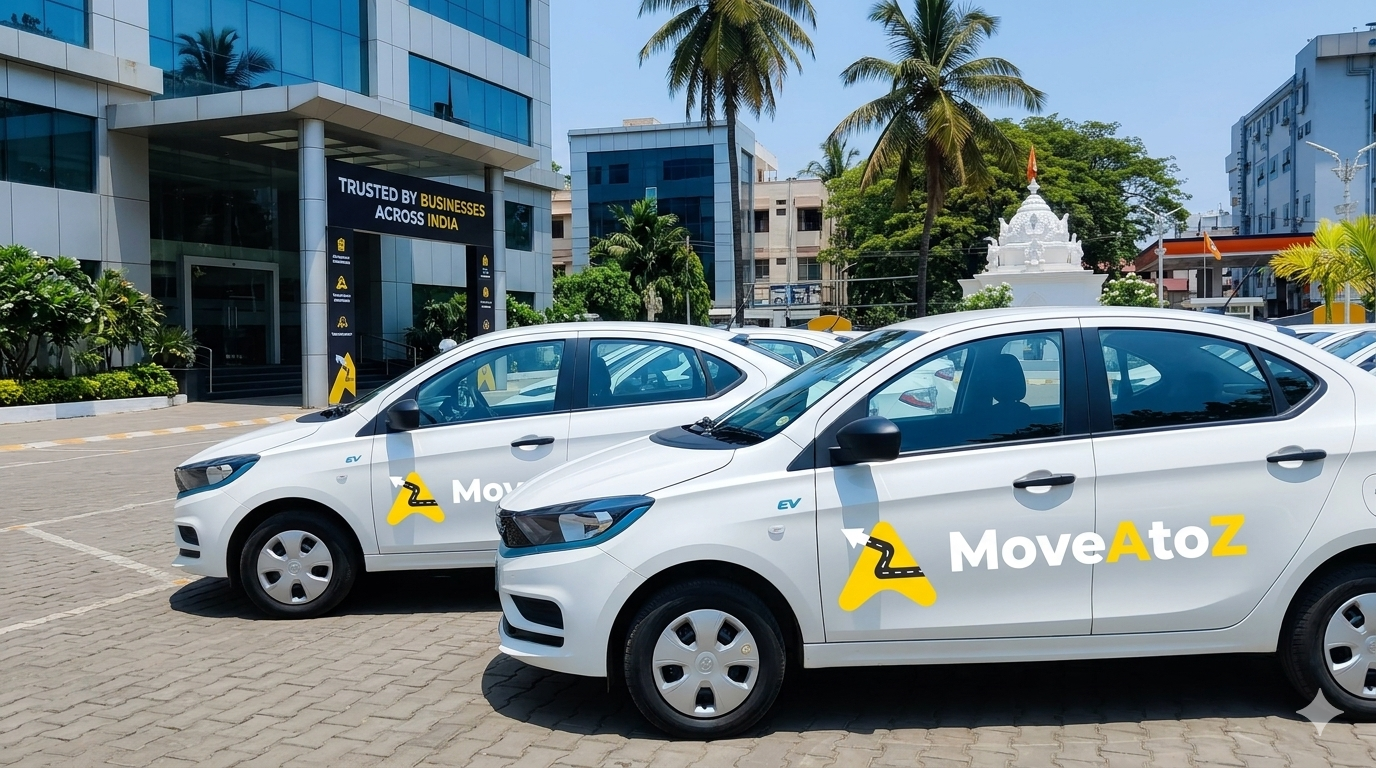
MoveAtoZ is one option built specifically around this risk-and-compliance layer. On safety: SOS alerts with a structured response workflow, OTP boarding verification, IVR-based call masking, a dedicated women safety module, and driver compliance checks backed by a dual-approval workflow. On operations: intelligent route optimization, live fleet tracking for both admins and employees, and automated shift-based rostering. On accountability: an admin dashboard covering trip management, an SOS control panel, and analytics reports on billing, no-shows, and compliance, plus automated invoicing (by car type or verified occupancy) that removes most manual reconciliation.
None of this replaces a lawyer or an insurance review, but it gives a company something concrete to point to when someone asks what safeguards were actually in place.
If you're not sure whether a Transport Management System for Companies is worth adopting, try answering these honestly:
If "not easily" is the honest answer to any of these, that tells you more than any feature comparison would — and it's exactly the gap a Transport Management System for Companies is meant to close.
Transport liability rarely feels urgent — right up until it suddenly is. The case for a Transport Management System for Companies was never that it eliminates risk completely, because nothing does. It's that it replaces guesswork and scattered records with something a company can actually stand behind when it matters most.