8:47 AM. Priya opens her laptop, and before she's even checked her email, her phone buzzes. It's a driver asking where exactly "Building B, near the parking gate" actually is. She doesn't manage transport full-time — it's maybe a fifth of her job — but somehow it eats up the first hour of almost every day.
9:03 AM. Another message. An employee's cab hasn't arrived, and she has no way of knowing if it's five minutes away or hasn't left the vendor's lot yet. She calls the vendor. The vendor says they'll "check and call back."
9:15 AM. The vendor calls back. The cab is running late because of traffic near the highway. Priya relays this to the employee, who's already messaged her manager to say she'll be late.
9:30 AM. A different employee texts asking if her return cab tonight is confirmed. Priya doesn't actually know — that booking lives in a different spreadsheet, one she updates manually at the end of each day, which means right now, she's guessing.
By 9:45 AM, Priya has spent almost an hour on something that, on paper, isn't even her main responsibility. Multiply that across every working day, and it stops looking like a minor inconvenience and starts looking like a real cost — not in the transport budget line, but in the hours of skilled people spent doing dispatcher work nobody hired them for. It's a productivity gap most companies never think to measure, and it's exactly where Corporate Cab Management Software earns its keep.
This is the exact problem Corporate Cab Management Software is built to remove.
Nothing in Priya's morning was unusual. It's a fairly ordinary Tuesday at a company without Corporate Cab Management Software. The time sink wasn't any single incident — it was the structure of the process itself:
None of this is a people problem. Priya is good at her job. It's a tooling problem — and it's the same one that repeats, in slightly different forms, at companies of every size that still coordinate cabs manually.
Now picture the same Tuesday, but with Corporate Cab Management Software in place.
8:47 AM. The driver doesn't need to text Priya, because the pickup location and directions were already sent to his app automatically when the trip was scheduled.
9:03 AM. Instead of calling Priya, the employee opens an app and sees the cab is 6 minutes away, tracked live. No phone call needed.
9:15 AM. If the employee does need to reach the driver directly — say, to mention she's waiting at a different gate — she can call him through the app's IVR-based call masking, so the call connects without either of them ever seeing the other's actual phone number.
9:30 AM. The evening booking is already visible in the same system, confirmed the moment it was scheduled, so there's no separate spreadsheet to check and no guesswork involved.
Priya's morning, instead of an hour of firefighting, takes about ten minutes — mostly spent on things that actually need a human judgment call, not routine status-checking.
It's easy to underestimate how much time gets absorbed by small, constant interruptions like Priya's. A five-minute call here, a status-check text there — none of it looks significant in isolation. But across a week, that adds up to hours. Across a team of admins handling transport for a few hundred employees, it adds up to a meaningful chunk of someone's actual job description, spent entirely on relaying information a system could surface automatically.
Corporate Cab Management Software doesn't eliminate every transport hiccup — traffic still happens, vehicles still occasionally break down. What it removes is the coordination overhead around those hiccups: the phone tag, the manual updates, the guessing. That's where the real time savings live, not in making cabs magically faster, but in making the information about them instantly available to everyone who needs it.
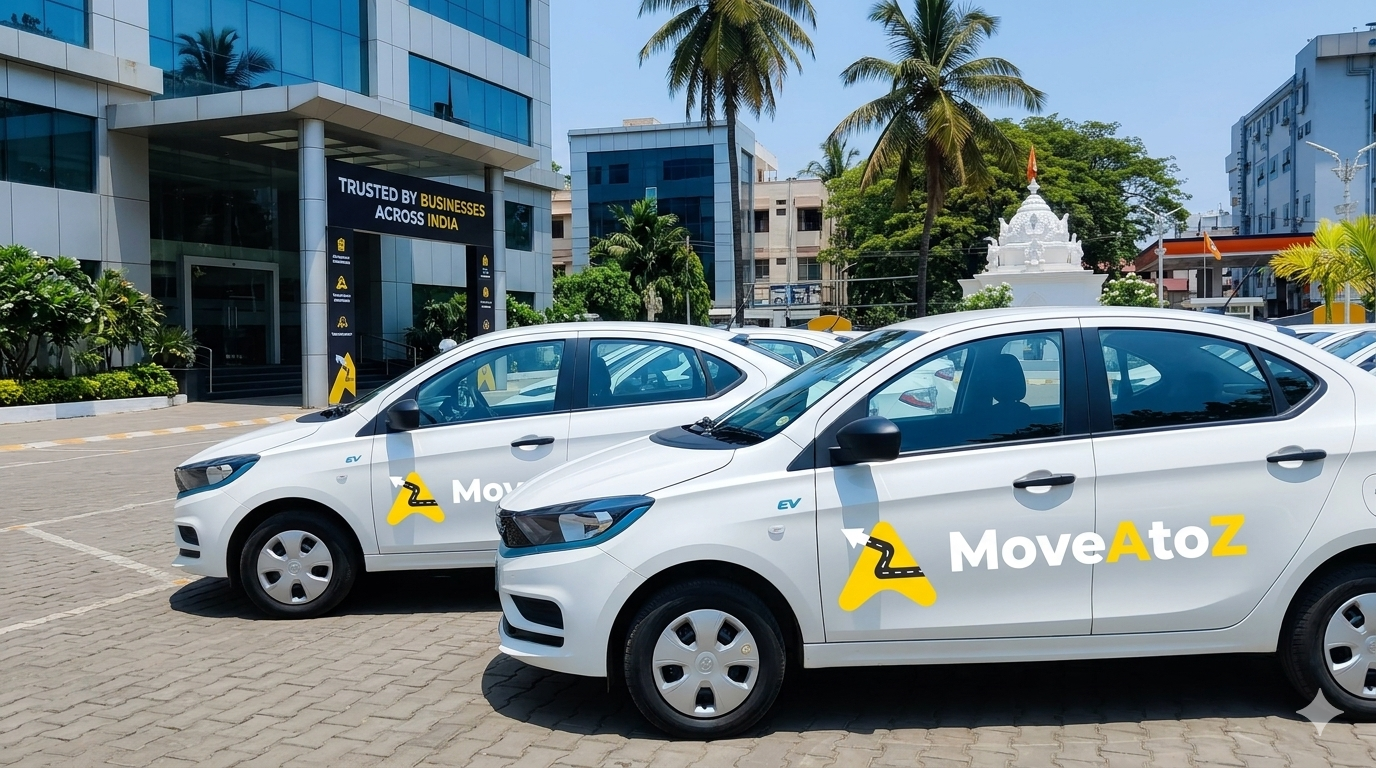
This is roughly the gap MoveAtoZ was built to close — live vehicle tracking so nobody has to call and ask "where's the cab," and IVR-based call masking so employees and drivers can sort out last-minute details directly, without a coordinator sitting in the middle of every conversation. For teams currently running transport the way Priya's company was, that alone tends to be the difference between transport being a background hum and it eating up a chunk of someone's actual workday.
The time-saving effect of Corporate Cab Management Software isn't limited to daily coordination. A few other places it shows up:
None of these are dramatic on their own. Together, they're the difference between transport quietly running itself and transport quietly consuming someone's time every single day.
Corporate Cab Management Software rarely gets pitched as a productivity tool, but that's often exactly what it is. The time it saves isn't flashy — it shows up as fewer interruptions, fewer phone calls, fewer "let me check and get back to you" moments. For someone like Priya, the right Corporate Cab Management Software isn't a minor convenience. It's the difference between spending her mornings coordinating cabs and actually starting her day on time.