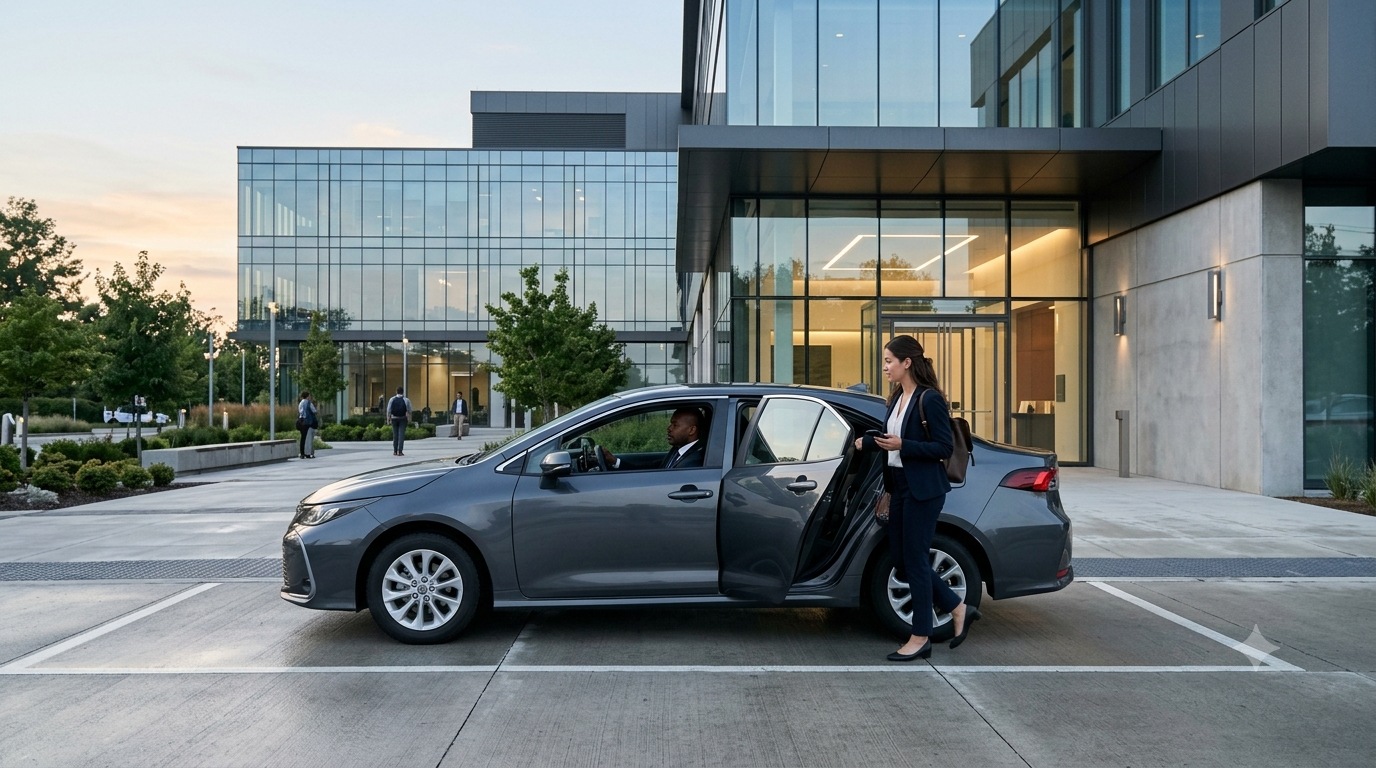
It's 9:47 PM. A driver is circling the same block for the third time because the pickup address in his notes doesn't match where the employee is actually standing. Somewhere a facilities coordinator is scrolling through three different WhatsApp groups trying to figure out which vendor was supposed to send a car tonight. And an employee is standing outside alone, phone battery at 12%, wondering if anyone even knows she's still waiting.
None of this shows up on a balance sheet. But it's happening, in some form, at thousands of companies every single night — because office transport is still being run the way it was run fifteen years ago: phone calls, spreadsheets, and hope.
A Corporate Transport Management System exists specifically to close that gap.
Strip away the buzzwords and it's fairly simple: a Corporate Transport Management System is software that replaces manual transport coordination — bookings, driver assignments, live tracking, and communication — with a single automated system. Instead of someone manually matching employees to cabs on a spreadsheet, the system handles scheduling, tracks vehicles in real time, and keeps a record of every trip.
It sounds unglamorous. It is unglamorous. But unglamorous problems, left unsolved, quietly cost companies real money and real trust.
It's tempting to assume this is purely an "HR thing," but that's rarely accurate. In most companies, the pain is shared across several people:
A Corporate Transport Management System touches all of these people, which is part of why manual processes break down so easily — too many stakeholders, too little shared visibility.
Ask most operations teams to explain exactly how their monthly transport bill was calculated, and you'll get a shrug. Without a Corporate Transport Management System, trip counts, vehicle usage, and vendor billing often live in different places — some in a vendor's own records, some in emails, some in nobody's records at all. That gap is where overbilling quietly hides.
Late-night and early-morning commutes carry real risk, and "the driver has our number" isn't a safety protocol. A Corporate Transport Management System typically includes live GPS tracking and SOS alerts, so if something feels wrong mid-trip, there's an actual mechanism to respond — not just a hope that someone picks up the phone.
There's also a quieter safety issue: personal phone numbers. When employees and drivers exchange direct numbers to coordinate pickups, that contact information often lingers long after the trip is over. Systems that use IVR-based call masking solve this neatly — the two parties can talk to coordinate a pickup, but neither one ever sees the other's actual number.
When vendor management lives in someone's inbox, accountability disappears the moment that person goes on leave or leaves the company. A proper transport platform keeps driver verification, vendor performance, and trip history in one place — visible to whoever needs it, not locked in one person's memory.
Strip out the sales language and here's what's actually happening behind the scenes of a decent Corporate Transport Management System:
None of this requires anyone to change how they work drastically. It just removes the guesswork.
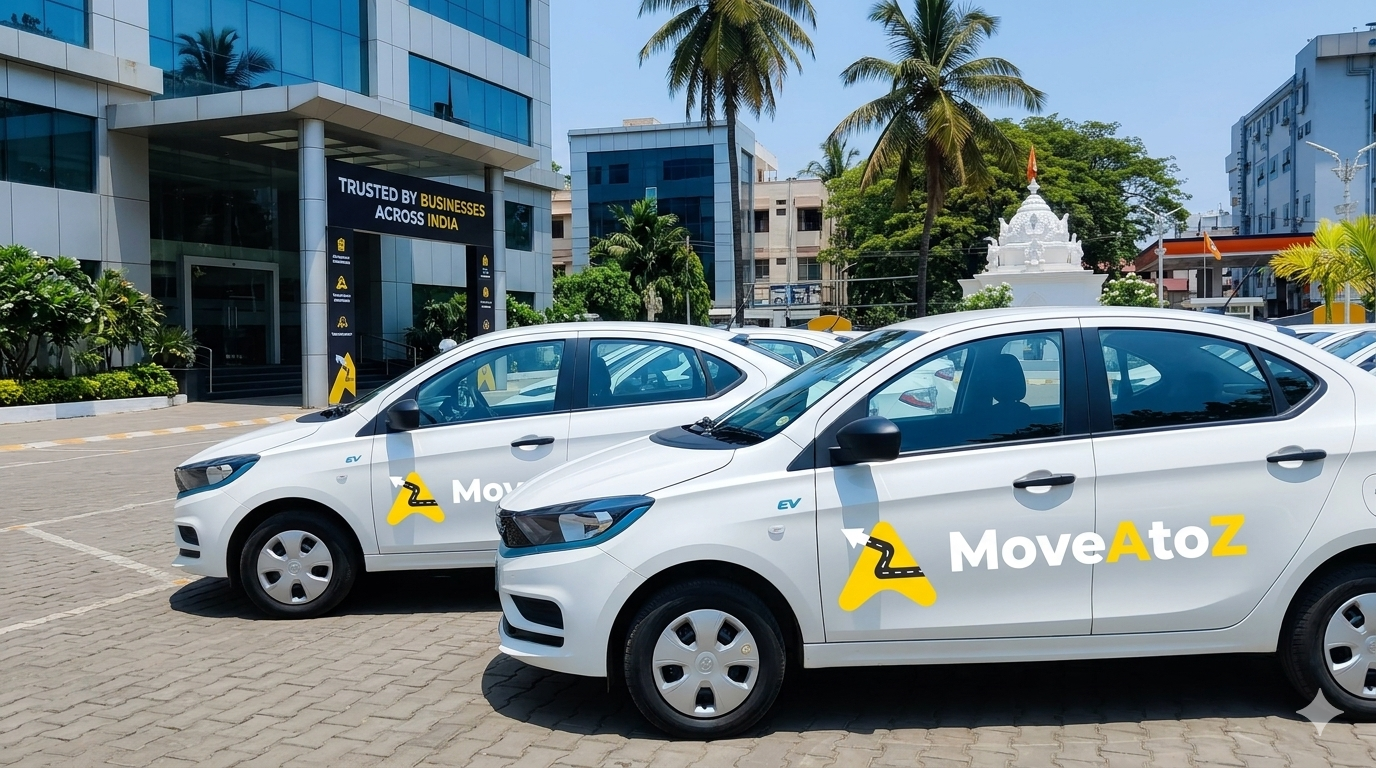
If you're picturing what this looks like in practice, MoveAtoZ is one platform built around exactly this idea — live vehicle tracking, IVR-based call masking between employees and drivers, and centralized vendor management, all in one place. It's not trying to reinvent office commuting; it's trying to make the version that already exists actually reliable and visible, instead of held together by phone calls and good intentions.
A common assumption is that a Corporate Transport Management System only makes sense once a company has hundreds of employees commuting daily. In practice, the tipping point is usually about complexity, not headcount. A 40-person company running two shifts across two office locations can feel just as much manual chaos as a 400-person company on a single shift. If pickup coordination already takes more than a phone call or two most days, that's usually the sign.
Does this replace our existing cab vendors?
No — a Corporate Transport Management System usually works alongside your existing vendors, giving you visibility and control over the trips they run rather than replacing them entirely.
Is this only useful for night-shift safety?
Safety is a big part of it, but cost visibility, vendor accountability, and reducing daily coordination workload matter just as much, even for companies with entirely daytime shifts.
Do employees need to download a separate app for every little thing?
Ideally, no. A well-built Corporate Transport Management System should feel lightweight — checking cab status or connecting with a driver shouldn't require a complicated setup.
Will this actually reduce costs, or just add another software expense?
It depends entirely on how disorganized the current process is. Companies with fragmented vendor billing and no usage data tend to see the clearest savings, simply because they finally have visibility into where money was leaking before.
Office transport is one of those things nobody thinks about until it fails publicly — a missed pickup, a safety scare, an inexplicable invoice. A Corporate Transport Management System doesn't make office commuting exciting. It makes it boring, in the best possible sense: predictable, tracked, and accountable, so nobody has to find out about a problem at 9:47 PM.