Most companies know their total monthly transport bill down to the rupee. Very few know what that actually costs per employee who rides, because that number depends entirely on how billing is structured — and most manual arrangements were never built to calculate it accurately in the first place. This is where Office Transport Management Software earns its keep: not by making transport cheaper on paper, but by making the actual cost per employee visible and controllable. Without it, cost per employee is usually a guess rather than a real figure anyone can act on.
A quick note before the numbers below: the example that follows is a simplified, illustrative walkthrough to show how the math changes under different billing models — not a real client's actual bill. The two billing models themselves, though, are real and both offered by platforms like MoveAtoZ.
Office Transport Management Software generally supports two different billing logics, and which one you use changes your cost-per-employee number significantly. Choosing the right one is often the single biggest lever a company has over its effective transport spend, more than any negotiation with a vendor:
Car-Type Based Billing — Invoices are generated per vehicle, based on its category (Sedan, Semi-SUV, SUV, or MPV), applying a fixed rate card regardless of how many seats were actually filled. This works well for mixed fleets, point-to-point executive transfers, or vendor agreements priced per vehicle.
Occupancy-Based Billing — Invoices are calculated per seat actually occupied on each trip, with OTP-verified boarding data feeding directly into billing, so you only pay for employees who actually rode. This works well for shared-vehicle pooling routes and shift-based commutes, where occupancy naturally varies day to day.
Both are legitimate approaches — the difference is what happens to your cost-per-employee number when occupancy isn't full, which, in most shift-based commute setups, is most of the time.
Say a company runs 50 shared vehicles a day for a shift commute, each with a 4-seat capacity. On a fairly typical day, average occupancy across those vehicles comes out to 3.2 seats — some vehicles run full, some run short because of no-shows, shift swaps, or last-minute schedule changes.
Under Car-Type Based Billing, at a flat rate of ₹800 per vehicle per trip regardless of occupancy:
Under Occupancy-Based Billing, at ₹200 per occupied seat:
Same company, same day, same number of employees riding — a 20% difference in effective cost per employee, purely based on which billing model applies. Multiply that gap across a full month of shift commutes, and it stops being a rounding error.
The gap isn't really about which billing model is "better" in the abstract — it's about matching the billing logic to the actual usage pattern. Car-type billing makes sense when a vehicle is dedicated to a specific route or executive transfer regardless of exact headcount. Occupancy-based billing makes sense when vehicles are shared and occupancy naturally fluctuates, which describes most shift-based office commutes.
The problem most companies run into isn't picking the wrong model on purpose — it's not having proper Office Transport Management Software capable of running both models at all, route by route, and not having OTP-verified boarding data to make occupancy-based billing trustworthy in the first place. Without verified boarding, occupancy-based billing is just as easy to dispute as any manual arrangement.
Beyond the billing model itself, a few other places tend to inflate cost-per-employee numbers when transport is handled manually:
Office Transport Management Software with a pure technology model, rather than a bundled fleet-and-tech arrangement, tends to remove the management-fee layer entirely, since the platform isn't also trying to profit from running its own vehicles. This is one of the clearest, most overlooked cost levers available to a company evaluating Office Transport Management Software for the first time.
If you're evaluating a platform with cost per employee in mind, a few questions cut through most of the guesswork:
1. Can billing modes be selected per route, not just company-wide? A single fixed model rarely fits both executive transfers and shared shift pooling equally well.
2. Is occupancy data actually verified, through something like OTP boarding, or just estimated after the fact?
3. Does the platform separate technology costs from fleet costs, or are they bundled in a way that makes the real management fee hard to see?
4. Can you actually get a report broken down by cost per employee, rather than just a lump vehicle total?
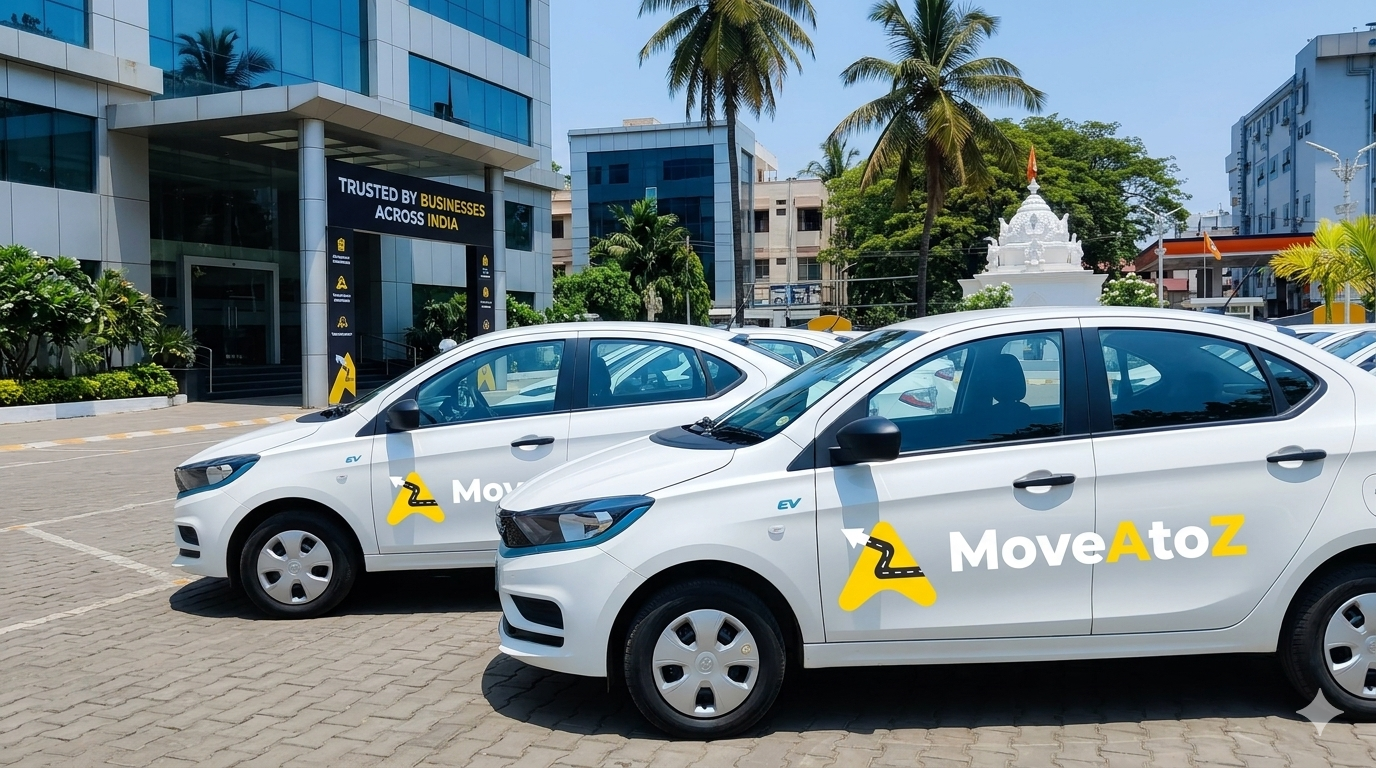
MoveAtoZ supports both car-type based and occupancy-based billing, selectable per route or client, with OTP-verified boarding data feeding directly into occupancy-based invoices so no-show disputes don't have to be argued over after the fact. It's a good example of what Office Transport Management Software looks like when billing accuracy is treated as a core feature rather than an afterthought. As a pure technology platform rather than a fleet-plus-tech bundle, it also removes the layered management fees that come with providers running their own vehicles.
Cost per employee isn't a number most companies think to ask for, because most transport arrangements were never built to produce it. Office Transport Management Software that supports both car-type and occupancy-based billing — with real, verified data behind whichever model applies — turns that number from a rough guess into something a finance team can actually plan around. That's ultimately what good Office Transport Management Software is for: not cheaper transport on paper, but a number you can actually trust.