"Tracking" tends to sound like a one-directional thing — a company watching its drivers, checking up on them, looking for mistakes. That framing misses half of what GPS Fleet Tracking Software actually does. Done properly, it protects employees just as much as it holds drivers accountable, because visibility cuts in both directions: it verifies what a driver did, and it verifies what an employee experienced.
At its core, GPS Fleet Tracking Software gives a company a live, recorded picture of where every vehicle in its fleet actually is and where it's been. That sounds simple, but it replaces something that used to rely entirely on trust — a driver's version of events, a vendor's word, or an employee's memory of what happened during a commute.
That verification matters for a few different groups at once, not just the company running the fleet.
For a company, GPS Fleet Tracking Software answers questions that used to require a phone call and a lot of trust: Did this driver actually follow the assigned route? Was a vehicle where it was supposed to be during a scheduled shift? If a complaint comes in about a late pickup, is there an actual record of what happened, or just two conflicting accounts?
Without this kind of visibility, driver accountability is mostly reactive — a company finds out about a problem only when someone complains, and even then, has little beyond the driver's own explanation to go on. With it, the record exists independently of anyone's account of events, which changes the nature of the conversation entirely.
This is the part that gets overlooked. Driver accountability isn't just about catching mistakes — it's also about giving employees a real basis for trust in the system they're relying on every day. An employee who knows their trip is tracked, that boarding is verified, and that a safety alert reaches someone immediately isn't just being monitored — they're being protected by the same visibility that holds the driver accountable.
That distinction matters more than it might seem. GPS Fleet Tracking Software that only serves the company's interests looks like surveillance. GPS Fleet Tracking Software that also gives employees a clear, verifiable picture of their own commute looks like something closer to a safety net.
A few concrete pieces of GPS Fleet Tracking Software tend to serve both sides of this at once:
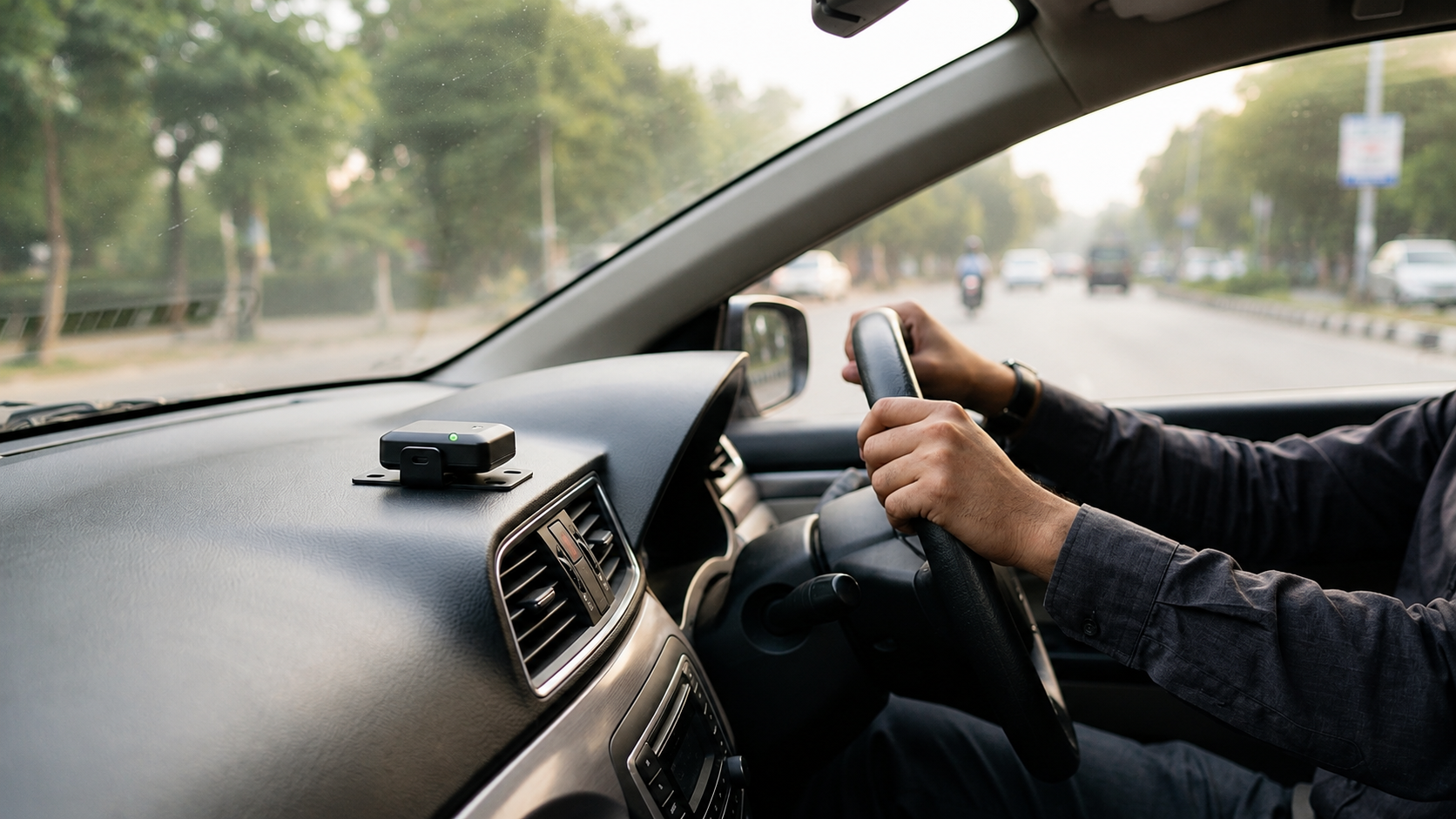
Live location tracking. For a company, this confirms a vehicle followed its assigned route and stayed on schedule. For an employee, it means they can see exactly where their ride is instead of waiting and wondering.
Boarding verification. For a company, this confirms the correct employee was actually in the vehicle at the time in question — useful for resolving disputes or investigating an incident. For an employee, it means their trip is properly logged, rather than existing only as a driver's unverified claim.
Driver compliance checks. For a company, this means drivers and vehicles go through a structured verification process before being assigned trips, rather than a one-time check nobody revisits. For an employee, it means the person driving them has actually been vetted, not just assumed to be fine.
SOS and incident response. For a company, this creates a documented safety process rather than relying on informal phone calls. For an employee, it means help is one tap away, with their location attached automatically.
Trip history. For a company, this provides a record to review if a dispute or incident needs investigating later. For an employee, it's proof that a trip happened exactly as it should have, without needing to argue about it after the fact.
Companies sometimes hesitate to bring in GPS Fleet Tracking Software because it can come across as distrustful toward drivers and employees alike. That hesitation usually fades once it's clear the same tracking that holds a driver accountable is also what gives an employee a real basis for feeling safe. A driver who's driving properly has nothing to lose from a verified record — if anything, it protects them too, since a false complaint is just as easy to disprove as a real one.
MoveAtoZ approaches accountability from both directions — live fleet tracking visible to admins and employees alike, OTP-based boarding verification, driver compliance checks backed by a dual-approval process, and SOS alerts that reach admins with the employee's live location attached. IVR-based call masking adds another layer here too, letting employees and drivers coordinate directly without exchanging personal numbers, which protects both sides of that relationship rather than just one.
A few questions worth asking when evaluating GPS Fleet Tracking Software with accountability in mind:
1. Is tracking data visible to employees, not just admins? If only the company can see it, it's surveillance. If both sides can, it's accountability.
2. Is driver verification an ongoing process, or a one-time check? Accountability that isn't revisited stops being reliable over time.
3. Does boarding verification actually confirm who's in the vehicle, rather than just tracking the vehicle itself?
4. Is there a real, documented safety response process, not just a location dot on a map?
GPS Fleet Tracking Software gets framed as a company tool for keeping tabs on drivers, and it is that — but treating it as only that misses the more useful half of what it does. The same visibility that holds a driver accountable is what gives an employee something solid to rely on. Accountability, done right, isn't about watching one side more closely. It's about giving both sides a record neither has to just take the other's word for.