If you run a company in Chandigarh, Mohali, Jaipur, or anywhere else in India with more than a handful of employees commuting to a fixed location — an office, a warehouse, a manufacturing unit, a hospital — you already know the daily headache. Someone on your team is spending hours every week juggling driver phone calls, endless status-check messages, and vendor invoices that never quite add up. This is exactly the gap that Employee Transport Management Software in India was built to close.
The Problem With "Managing It Manually"
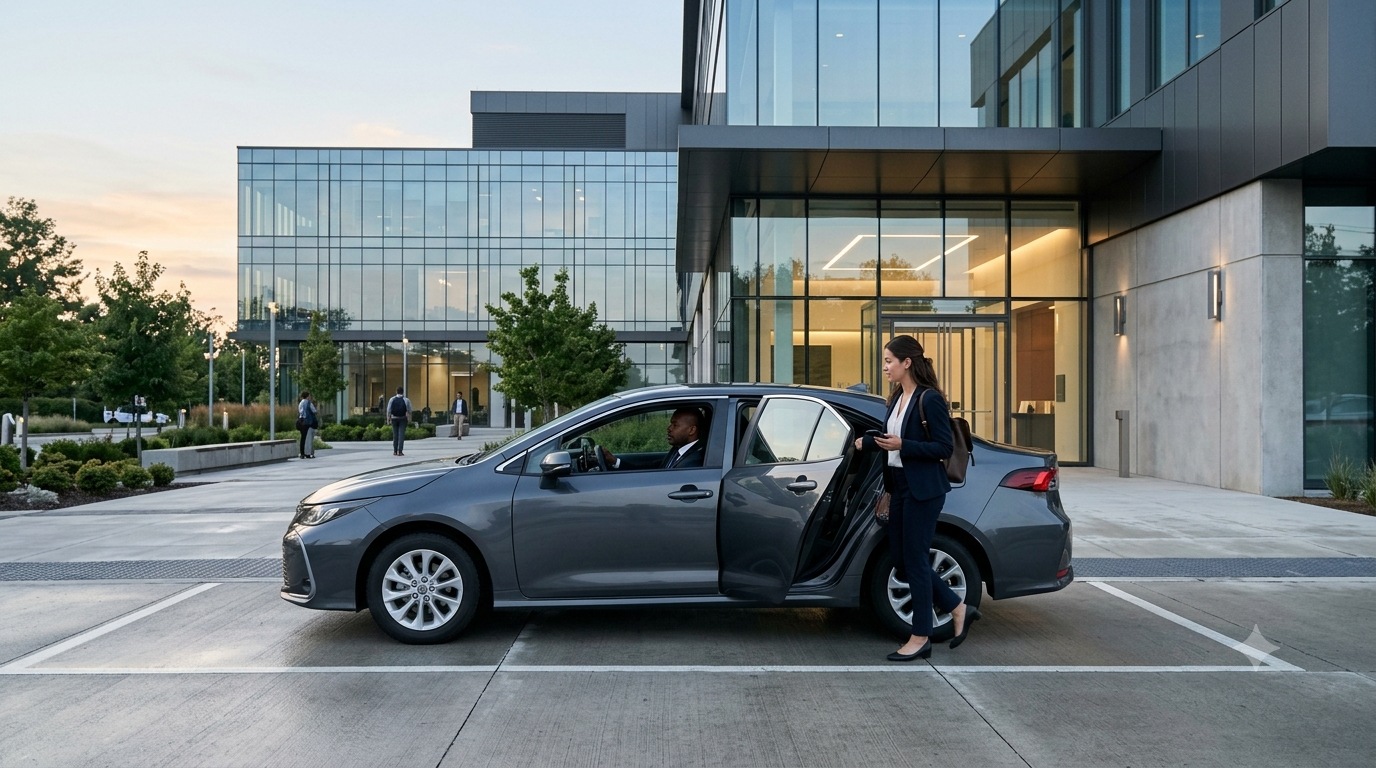
Most Indian businesses start out managing employee commute the old way: a transport coordinator, a spreadsheet, a few cab vendors on speed dial, and a lot of improvisation. It works — until it doesn't. As headcount grows, shifts multiply, and offices expand across cities, manual coordination breaks down fast. Pickups get missed. Routes overlap and waste fuel. Nobody can answer "where is the cab right now" without calling the driver directly. And when something actually goes wrong — a breakdown, a late-night safety incident — there's no system of record to fall back on.
This is precisely why Employee Transport Management Software in India has moved from a "nice to have" to a core operational requirement for companies of every size, not just large IT parks and MNCs in the metros.
What Employee Transport Management Software Actually Solves
At its core, good Employee Transport Management Software in India gives you three things that a phone and a spreadsheet never can:
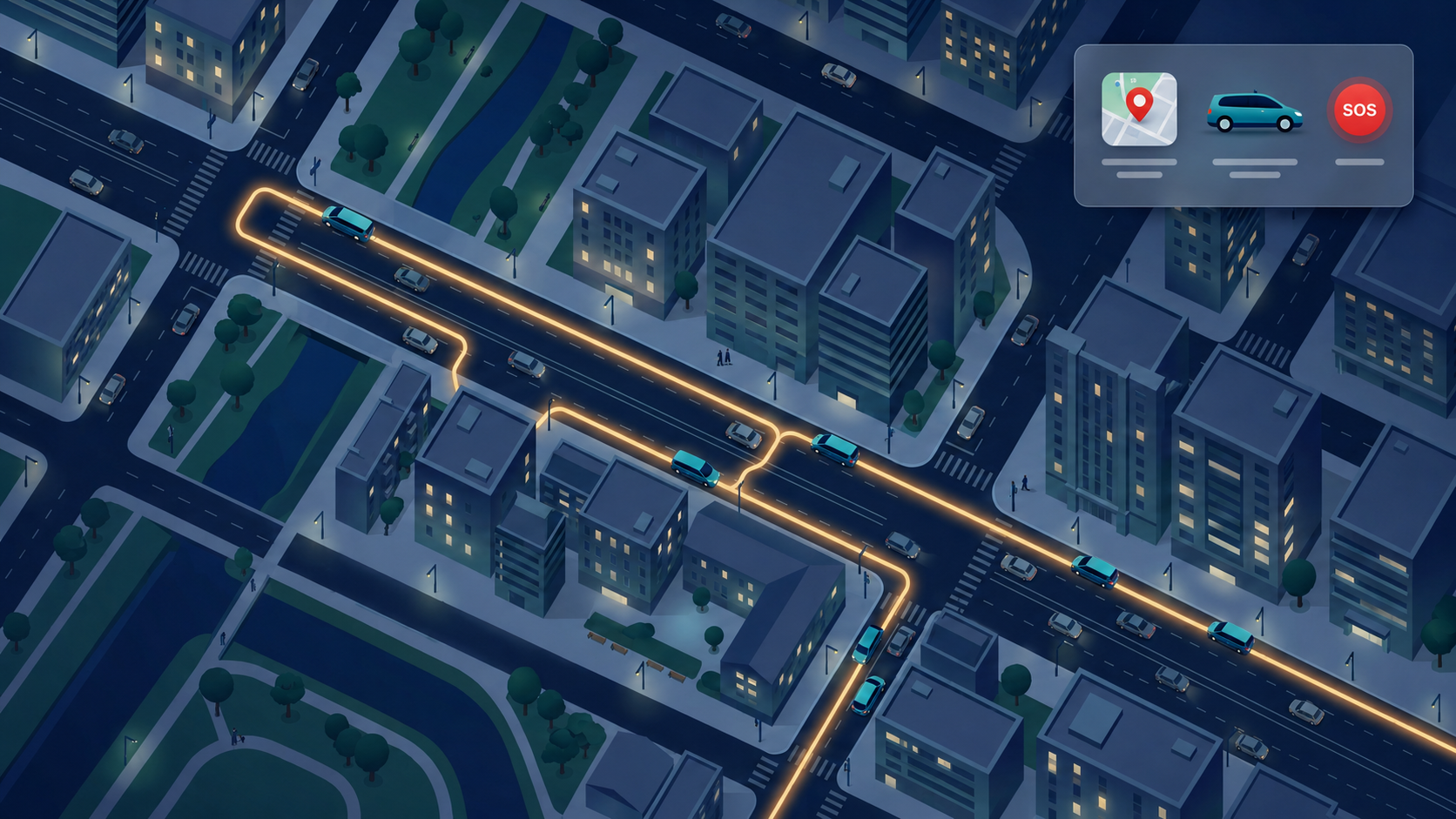
Real-time visibility — live GPS tracking of every vehicle, so admins and employees both know exactly where a cab is, without a single phone call.
Automated route and shift planning — the system builds optimized pickup routes based on employee addresses and shift timings, instead of a human trying to solve it manually every evening.
Accountability and audit trails — every trip, every driver, every vehicle is logged, so if something ever goes wrong, there's a clear record of who was where, when.
Beyond this, most modern platforms bring in SOS/panic buttons for employee safety, IVR calling with number masking (so employees and drivers never need to exchange personal numbers), automated attendance-linked billing, and dashboards that give HR and finance a single source of truth instead of ten different vendor invoices to reconcile.
Why This Matters in Growing Cities Like Chandigarh, Mohali, and Jaipur
Employee transport challenges aren't limited to Bengaluru or Gurgaon anymore. Cities like Chandigarh, Mohali, and Jaipur have seen a sharp rise in IT parks, manufacturing units, and corporate offices over the last few years — and with that growth comes the exact same commute pressures larger metros have already dealt with. Traffic bottlenecks around key business corridors, employees commuting in from surrounding towns, and shift-based industries all make manual coordination harder to sustain as a company scales.
Employee safety — especially for women working late or early shifts — is a serious, non-negotiable concern that regulators and companies alike are paying closer attention to, regardless of city size. And with hybrid work schedules now common even outside the metros, commute demand is no longer a predictable daily headcount; it spikes unpredictably depending on who's in the office on a given day.
All of this makes Employee Transport Management Software in India less of a metro-only convenience and more of a risk-management necessity for companies expanding into tier-2 cities. Businesses that don't invest in it are often the ones that only discover their gaps after an incident — a missed pickup that turns into an HR complaint, a vendor billing dispute nobody can resolve, or worse, a genuine safety lapse that could have been prevented with real-time tracking and SOS support.
Two Ways to Adopt It — And Why the Choice Matters
Here's something most companies don't realize until they start evaluating options: Employee Transport Management Software in India doesn't have to mean choosing between "buy software" and "hire a transport vendor." There are actually two legitimate paths, and the right one depends on where your company is today.
Software-only, if you already run your own fleet or work with trusted local vendors in cities like Chandigarh or Jaipur and just need the technology layer — tracking, routing, SOS, billing — sitting on top of what you have.
Software + managed fleet, if you'd rather not deal with vehicle procurement, driver verification, and vendor management at all, and want a single partner handling both the technology and the actual cabs, drivers, and day-to-day fleet operations.
This flexibility matters because it means a company isn't locked into a rigid model just to get modern commute technology. A growing business in Mohali or Jaipur can start with software layered onto an existing vendor relationship, and later move to a fully managed fleet as headcount scales — or the reverse. Whichever path is chosen, the evaluation criteria for Employee Transport Management Software in India stay the same: real-time tracking accuracy, driver verification standards, safety features like SOS and number masking, ease of use for both admins and employees, and transparent, attendance-linked billing that doesn't leave finance guessing.
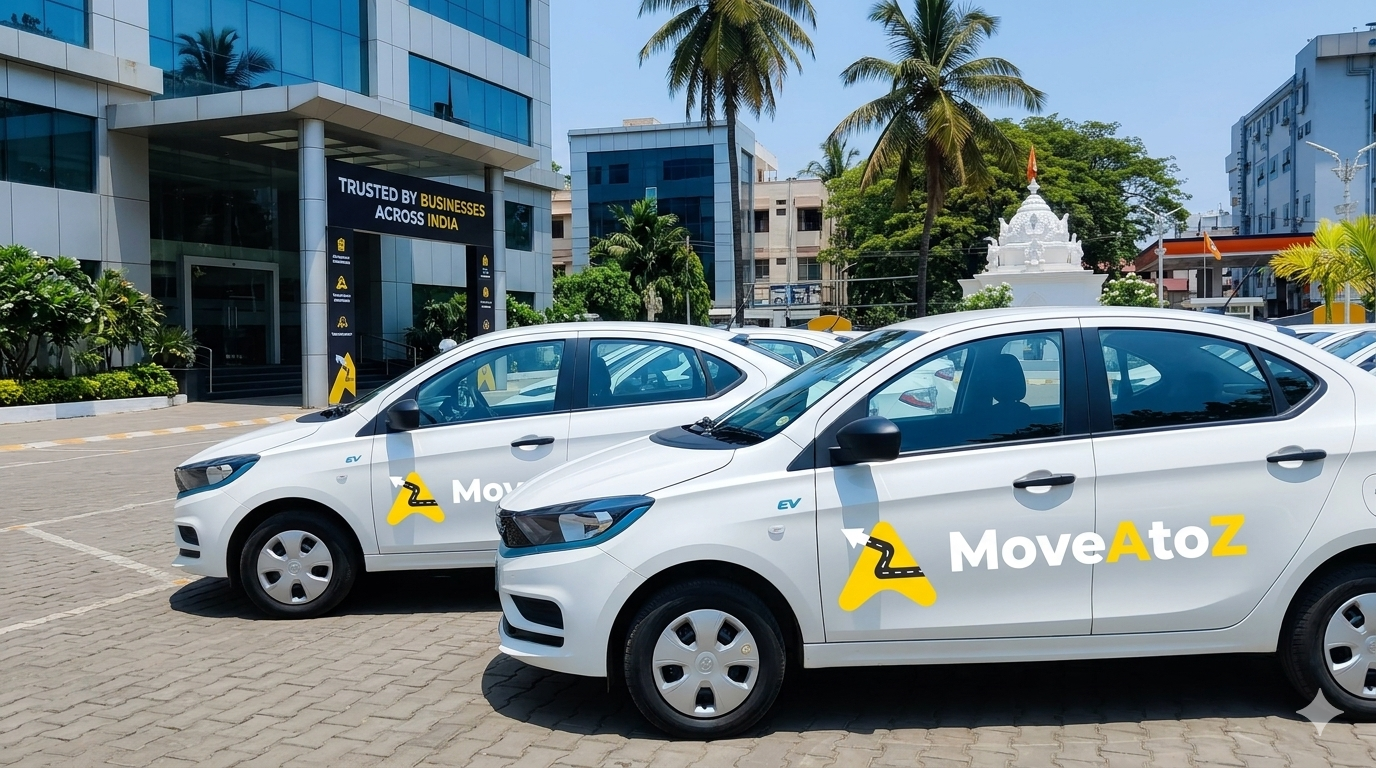
Some providers in this space, MoveAtoZ among them, offer exactly this kind of flexibility — letting companies choose a pure technology layer or a combined software-and-fleet arrangement depending on what stage their transport operations are at.
What to Look for Before You Choose
For a business owner in Chandigarh, Mohali, or Jaipur evaluating Employee Transport Management Software in India for the first time, a few things are worth checking before committing to any provider:
Does the platform offer live tracking that's actually accurate, not just a rough estimate?
Are drivers background-verified, and is that verification ongoing rather than one-time?
Is there a genuine SOS/emergency response feature, not just a marketing checkbox?
Can billing be automated and tied to actual attendance, instead of flat monthly vendor invoices?
Does the provider offer both software-only and software-plus-fleet options, so a company isn't forced into a model that doesn't fit its current stage?
Does the provider actually operate or have coverage in tier-2 cities, or only in the major metros?
Getting these answers upfront saves months of frustration later. Many companies switch providers within their first year simply because they didn't ask these questions early enough.
The Bottom Line
Employee commute is no longer a background logistics problem that can be left to a coordinator and a phone — whether the company is based in a major metro or a fast-growing city like Chandigarh, Mohali, or Jaipur. It's a safety issue, a cost center, and increasingly, a factor in how employees judge their employer's professionalism. Employee Transport Management Software in India — whether adopted as a standalone platform or bundled with a fully managed fleet — gives business owners the visibility, accountability, and safety infrastructure that manual coordination simply cannot match.
Whether it's a 50-person startup in Mohali or a 5,000-person enterprise with multiple campuses across Jaipur and Chandigarh, the underlying need is the same: a system that shows exactly where employees are on their commute, keeps them safe, and doesn't require a phone call to get an answer. That's the real promise of good Employee Transport Management Software in India — and it's why more Indian companies, in metros and tier-2 cities alike, are choosing to invest in it now rather than after something goes wrong.