Every company that runs shift-based transport eventually runs into the same basic problem: getting people to and from work reliably, without it turning into a daily coordination headache. Employee Pickup & Drop Software exists to solve exactly that — nothing more mysterious than making sure the right person gets picked up, gets dropped off, and everyone involved knows what's happening along the way.
Strip away the marketing language and Employee Pickup & Drop Software is fairly simple to describe: it's a system that schedules rides, tracks vehicles, verifies who's actually boarding, and gives both employees and admins visibility into what's happening in real time. Instead of pickup and drop coordination living inside phone calls, WhatsApp groups, and someone's memory, it becomes something anyone involved can check directly.
For a company with a handful of employees commuting occasionally, this might sound like overkill. For a company running shift-based transport across dozens or hundreds of employees, it's usually the difference between an admin's day being manageable or constantly on fire.
The need for Employee Pickup & Drop Software rarely shows up all at once. It usually builds gradually — a few more employees, a second shift added, a vendor that stops being reliable — until one day the manual process that used to work fine simply can't keep up anymore.
A few specific pressure points tend to push companies toward adopting Employee Pickup & Drop Software:
Coordination that used to take a few minutes starts eating up hours. What worked with ten employees on one shift falls apart once there are fifty employees split across three shifts, each with slightly different timing.
Safety expectations rise. Employees, especially those commuting at night, reasonably expect more than "the driver has our number" as a safety plan.
Cost visibility disappears. Vendor bills get harder to verify the more trips are running, and without records to check against, companies end up trusting invoices they can't fully explain.
Accountability gaps show up. Without a system tracking who actually rode in which vehicle, disputes over no-shows, delays, or incidents come down to conflicting accounts rather than an actual record.
A few core pieces tend to show up across any solid platform in this space:
Scheduling that employees can manage themselves. Rather than every pickup or drop request going through an admin, employees can select dates, shift timing, and submit requests directly, with the system handling assignment from there.
Live tracking for both sides. Employees can see where their ride actually is instead of waiting and wondering, and admins get the same visibility across every active vehicle at once.
Boarding verification. A simple confirmation step, usually a one-time code, that ties a specific employee to a specific trip — useful for safety, and just as useful for resolving disputes later.
A safety escalation path. Something more concrete than a phone number to call if something goes wrong mid-trip — an alert that reaches the right people immediately, with location attached.
Driver and vehicle verification. A structured process for checking that drivers and vehicles meet compliance standards, rather than a one-time check that never gets revisited.
Reporting that doesn't require manual reconstruction. Trip counts, no-shows, and costs available as an actual report, rather than something an admin has to piece together before every review.
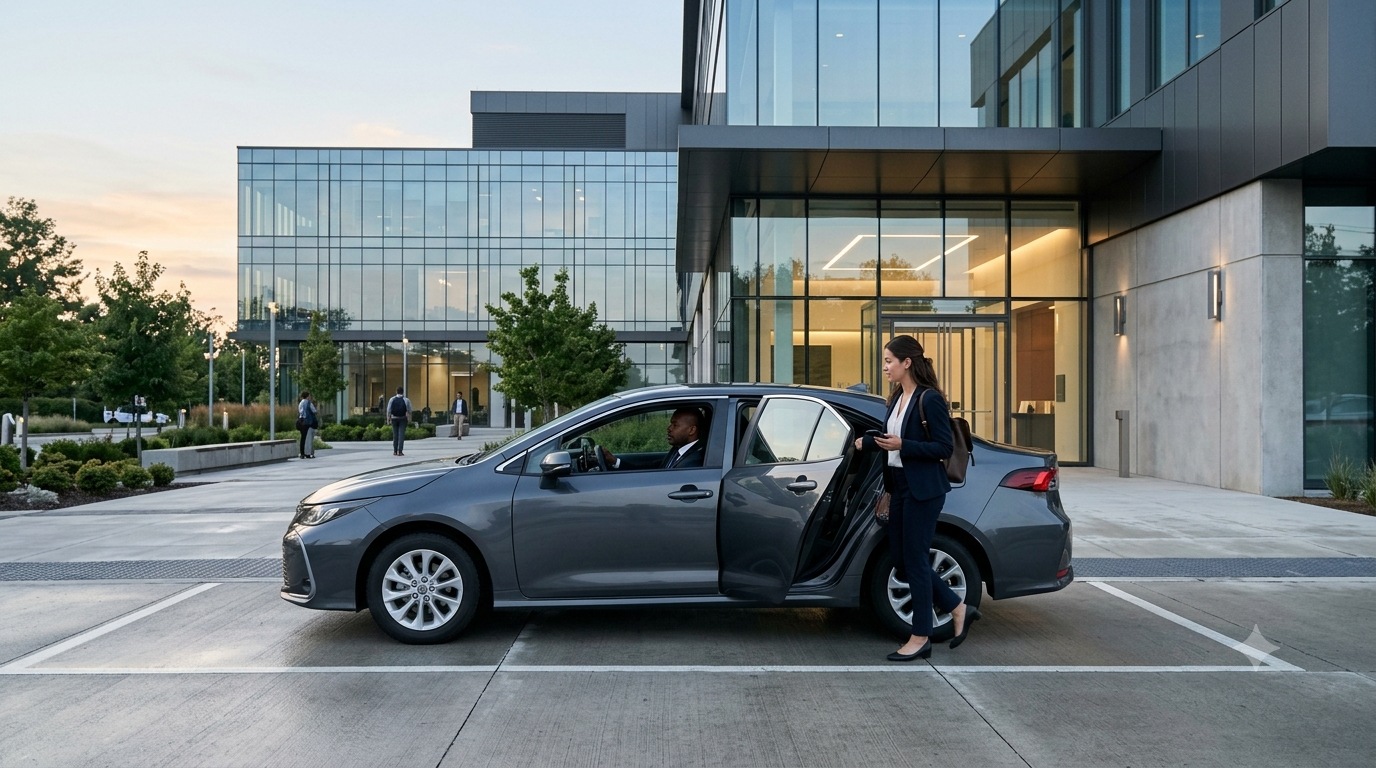
It's easy to talk about this kind of software purely from an operations angle, but the employee side matters just as much. With proper Employee Pickup & Drop Software in place, an employee knows their pickup time in advance, can see their driver's details before boarding, and has a real way to reach someone if their ride runs into trouble. None of that sounds dramatic on its own — it's the accumulation of small certainties that makes a daily commute feel less like a gamble.
For whoever's actually running transport day to day, the shift tends to be less about new capability and more about reduced noise. Fewer "where's my cab" messages. Fewer late-night phone calls chasing down a vendor. A monthly report that already exists instead of one that has to be built from scratch. None of it eliminates the job — it just removes the parts of it that never needed to be manual in the first place.
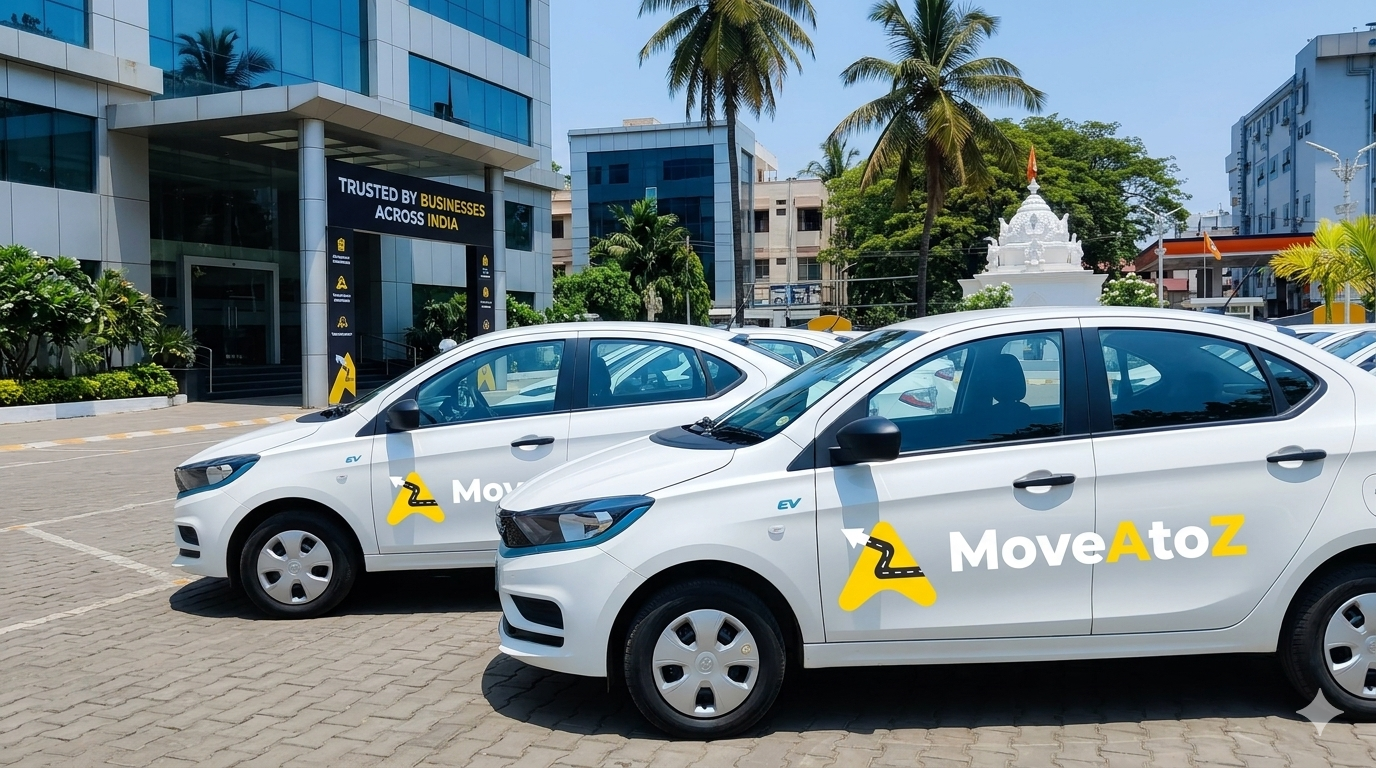
MoveAtoZ covers this ground directly — employee self-scheduling by shift, live tracking visible to both employees and admins, OTP-based boarding verification, SOS alerts routed to a structured admin workflow, and driver compliance checks backed by a dual-approval process. Billing runs either by vehicle type or by verified occupancy, so cost reporting doesn't depend on manually reconciling vendor invoices after the fact.
A handful of practical questions tend to matter more than any feature list:
Can employees actually manage their own scheduling, or does everything still route through an admin? Is tracking genuinely live, or does it lag behind reality? Is boarding verified in some real way, or just assumed? Does the safety mechanism reach someone immediately, or depend on a phone call landing at the right moment? And can reports be pulled on demand, without needing to request them from a vendor first?
Employee Pickup & Drop Software isn't a complicated idea dressed up in technical language — it's a fairly ordinary problem, getting people to and from work reliably, solved with an actual system instead of goodwill and phone calls. Companies that put off adopting Employee Pickup & Drop Software usually aren't avoiding complexity. They're just postponing the moment they finally sit down and count how many hours a week the manual version is actually costing them.