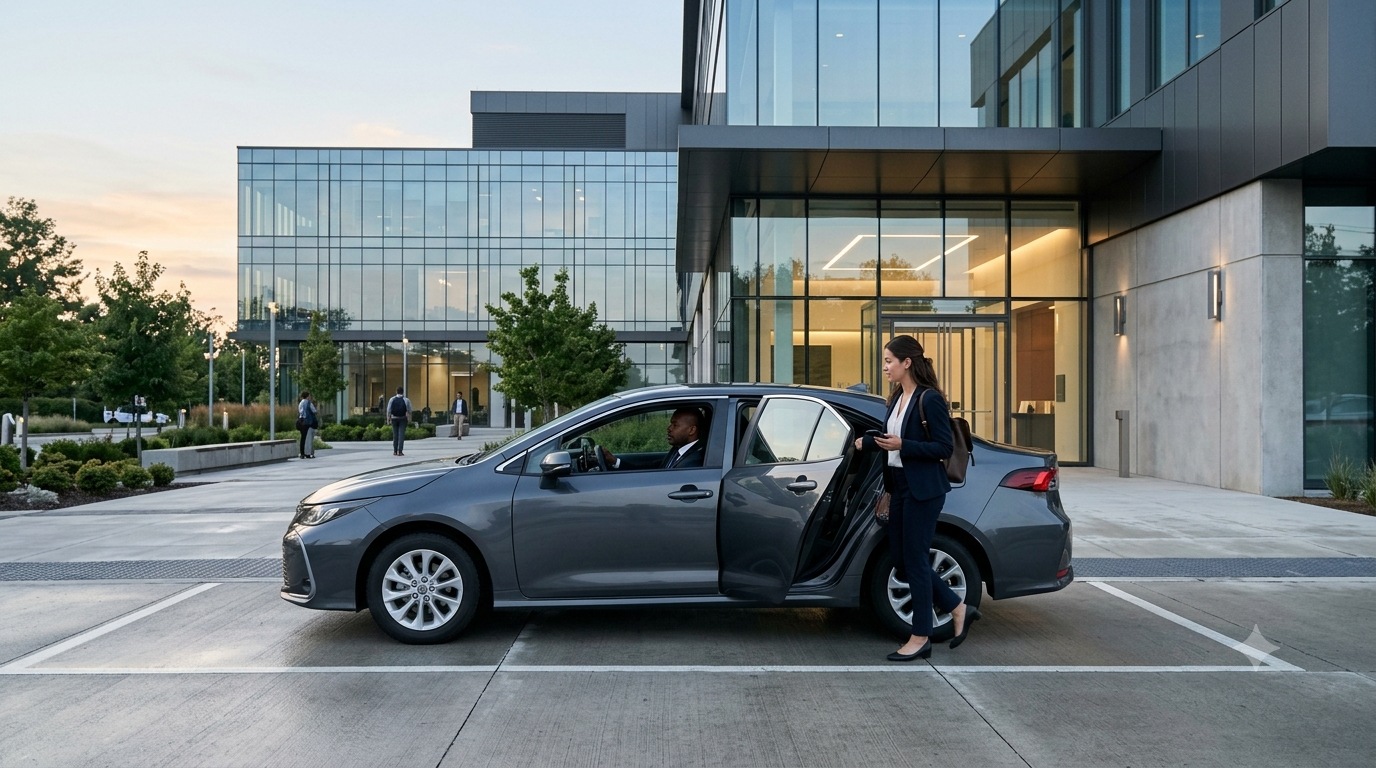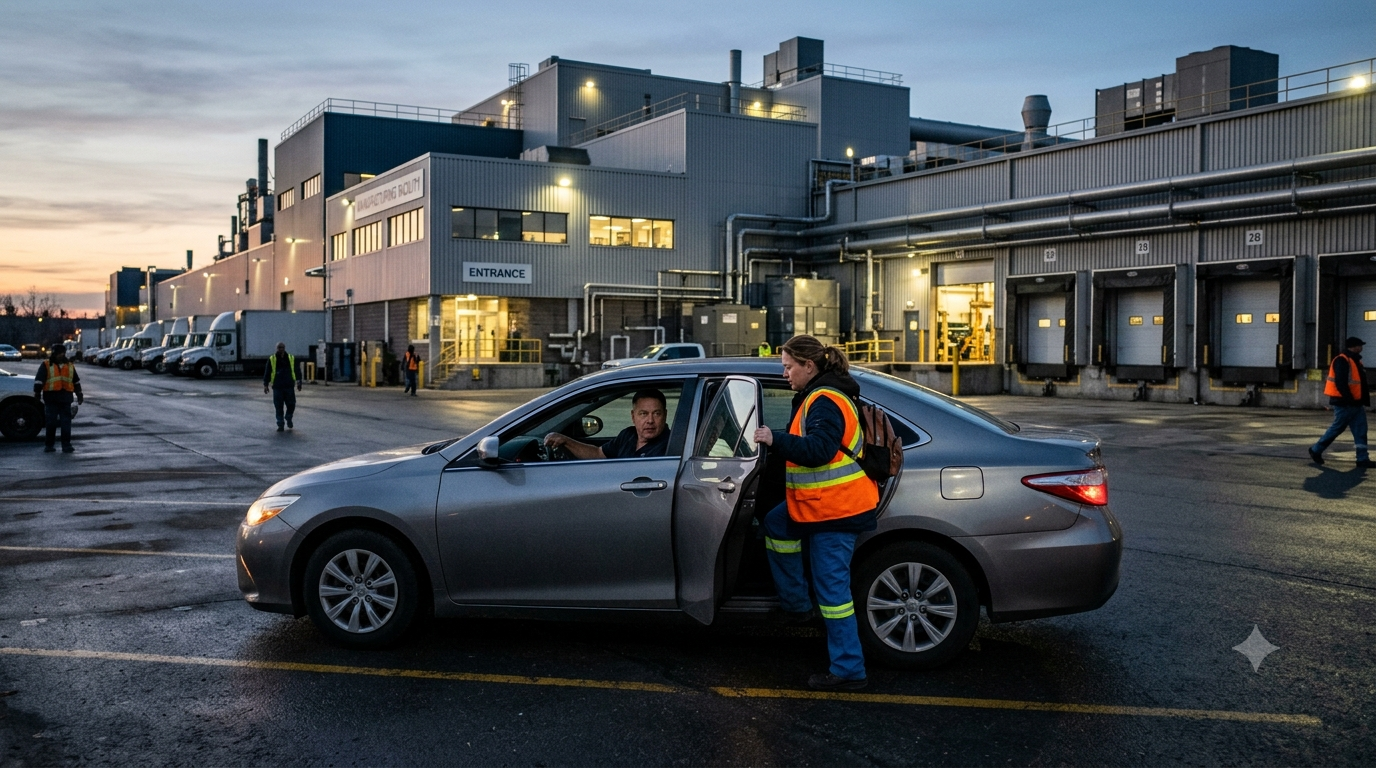
Most manufacturing facilities aren't built next to residential neighborhoods. They're built where land is cheap and zoning allows heavy machinery — on the outskirts of town, in industrial parks, near highways nobody else wants to live close to. That's a sound business decision for the factory. It's a logistics problem for everyone who has to get there.
For a plant floor, employee commute isn't a side issue — it's directly tied to output. A shift that starts late because half the workforce is stuck waiting for a pickup isn't just an HR inconvenience; it's lost production time. This is why more manufacturing and facility owners are looking at Employee Commute Management Software not as an office perk, but as an operational necessity — and why the case for it usually holds up even before anyone runs the numbers.
The situation: A mid-size auto parts plant tracked its morning shift attendance for three months and found something odd — nearly 9% of "no-shows" weren't actually employees skipping work. They were employees who couldn't reliably get a ride, especially those living outside the two or three main pickup zones the transport vendor prioritized. Line supervisors were left short-staffed with almost no warning, since nobody knew who was actually stuck versus who simply hadn't shown up.
The gap: Without visibility into who's been picked up and who hasn't, "absenteeism" data quietly includes people who wanted to be there and couldn't manage it. That's a transport failure being misread as a workforce discipline issue.
The fix: Employee Commute Management Software gives facility managers real-time visibility into pickup status — who's been collected, who's en route, and who's genuinely missing. That single change turns a guessing game into an actual staffing decision made with real information, often early enough to call in a backup for the line.
The situation: A textile manufacturing unit running three rotating shifts had a recurring 15-minute bottleneck every changeover — incoming and outgoing shift workers all converging on the same gate at once, cabs and buses double-parked, drivers unsure which group they were supposed to be collecting.
The gap: Manual shift scheduling, especially across rotating patterns, is hard to keep accurate. A spreadsheet updated by one coordinator doesn't scale well once shift patterns change weekly, and vendors often work off outdated pickup lists.
The fix: Employee Commute Management Software automates scheduling based on actual shift rosters, so pickups and drop-offs are staggered by shift group instead of clustering at one chaotic point. For a facility with hundreds of workers rotating through shifts, this alone can cut changeover time significantly, and it removes the coordinator from having to manually reconcile lists every week.
The situation: A large warehousing and logistics facility relies heavily on contract labor, with headcount fluctuating by the week depending on order volume. Transport for these workers was arranged informally through subcontractors, with almost no record of who was riding which vehicle on any given day.
The gap: When something goes wrong — a vehicle breakdown, a late drop-off, a safety incident — there's often no clear record of which workers were on which trip. This isn't just inconvenient; for facilities with safety compliance obligations, it's a real liability.
The fix: A proper Employee Commute Management Software platform keeps trip records, driver assignments, and rider details logged centrally, regardless of whether the worker is permanent or contract staff. It also typically includes live vehicle tracking and SOS alerts, so if something does go wrong mid-transit, there's an actual mechanism to respond rather than finding out after the fact.
There's a privacy layer worth mentioning here too: many Employee Commute Management Software platforms now use IVR-based call masking, which lets drivers and workers coordinate a pickup by phone without either side seeing the other's personal number. For facilities juggling a large, sometimes fast-changing contract workforce, that small detail meaningfully reduces the risk of driver phone numbers being passed around or misused after a worker's contract ends.
The situation: A packaging facility running two shifts across two locations was paying a flat monthly rate to its transport vendor. When leadership asked for a cost breakdown by route, shift, and vehicle utilization, the vendor could only provide a rough estimate — no facility-side data existed to check it against.
The gap: Without independent trip and usage records, facility owners are essentially trusting vendor invoices at face value. This is precisely the blind spot Employee Commute Management Software is designed to close — overbilling, underused vehicles, and inefficient routing all hide comfortably without it.
The fix: Good Employee Commute Management Software generates its own usage data — trip counts, vehicle utilization, cost per route — independent of what the vendor reports. This gives facility owners a factual basis for renegotiating contracts or switching vendors, instead of relying on the vendor's own numbers.
This is the kind of gap MoveAtoZ was built around — combining live vehicle tracking, shift-based scheduling, and IVR-based call masking between employees and drivers into one system, so facility managers aren't stitching together spreadsheets, vendor calls, and guesswork to answer basic questions about who's on which vehicle and when. For manufacturing and industrial facilities specifically, that visibility tends to matter more than it does for a typical office, simply because the operational cost of a missed pickup is so much higher.
An office employee who misses a pickup can usually work from home for a few hours or come in late without much fallout. A production line worker who doesn't show up on time can mean an idle machine, a missed output target, or a supervisor scrambling to reassign tasks with no notice. The stakes attached to commute reliability are simply higher in manufacturing and facility-heavy environments, which is exactly why Employee Commute Management Software tends to pay for itself faster in these settings than in a standard corporate office.
For facility owners evaluating options, a few practical questions cut through most of the sales pitch:
If a platform can answer yes to all five, it's solving the actual problem — not just adding a dashboard on top of the same manual chaos.
Manufacturing and facility leaders spend enormous effort optimizing machines, supply chains, and floor layouts down to the minute — yet the commute that gets workers to the floor in the first place is often left to informal arrangements and best guesses. This is the exact gap Employee Commute Management Software closes, turning transport from an unpredictable variable into something as measurable and manageable as any other part of the operation.